
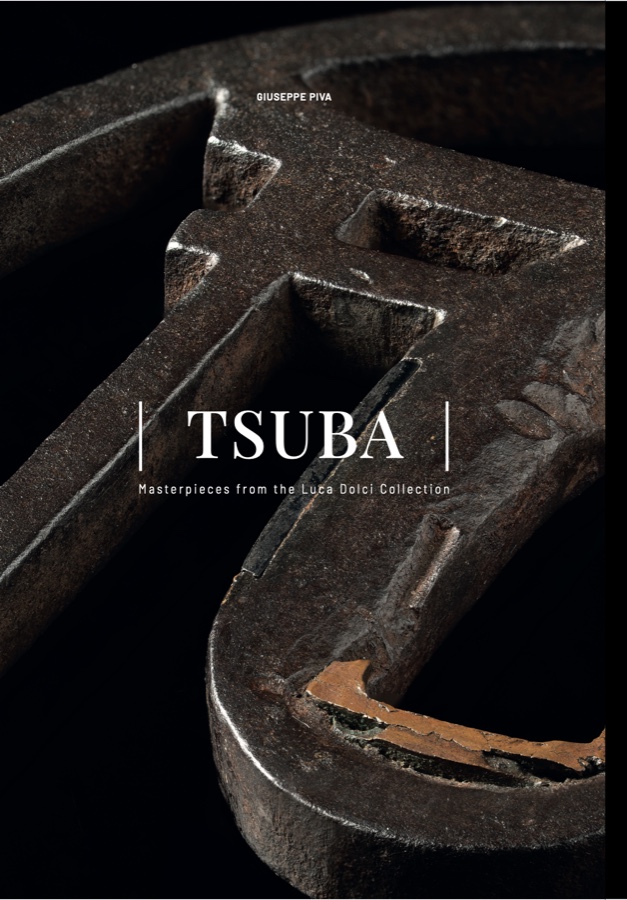
Never before published, and rarely seen even by specialists: a selection of one hundred and fifty tsuba from a single private collection, each photographed on both faces and documented in full — signature, period, provenance, literature — from the rugged strength of Nobuie's iron and the austere elegance of the Higo masters to the inventive brilliance of Yasuchika.
Foreword
On the collector Luca Dolci, and the quiet devotion that built one of the finest tsuba collections of our time.
Our weekly meetings followed a familiar, unhurried rhythm. Once a week, Luca would arrive in the late morning. We would talk of the world, of the latest auctions, and the shifting tides of the market. Then, at the stroke of one, we would cross the street to the same restaurant for our ritual: a chateaubriand for two and two glasses of red wine — though the wine, he insisted, was “never to arrive before the meat, or we will end up drinking too much.”
For years, this was our cadence. Yet, despite our closeness, Luca spoke of his own collection with a reserve that bordered on the ascetic. He never boasted; he rarely even shared his desires. His acquisitions were a private dialogue between himself and the art. Occasionally, while leafing through a reference book, I would point to an exceptional piece and remark on its brilliance. Luca would simply smile. In that silence, I knew: the masterpiece was his.
Luca’s eye was uncompromising. From the profound depth of Zeshin’s lacquers to the intricate spirit of Tomotada’s netsuke, he sought nothing less than the sublime. However, his heart belonged to the tsuba. He loved these palm-sized universes, enjoying them in their purest form. He was largely indifferent to the modern obsession with certification, often misplacing the papers entirely, preferring instead the intrinsic power of a well-documented provenance or the undeniable genius of the work itself.
His aesthetic was rooted in the strength of iron. Having studied under Masayuki Sasano, Luca eventually acquired a significant portion of his mentor’s legendary collection. Within the context of kinkō works, his interest was specifically drawn to the wabi-sabi aesthetic, with a marked predilection for the inventive brilliance of Yasuchika and the austere elegance of the Higo masters, always favoring the understated beauty of older pieces.
As the collection reached several thousand works, we spoke of publishing a selection of them. We imagined a high-quality volume that would showcase the true depth of these masterpieces, including those already celebrated in the literature of the field. As his health declined, our shared vision receded into the shadows. Following his passing, I felt a solemn duty to bring that vision into the light.
This volume is a curation of the most significant and representative pieces from that vast, private world. It is a tribute not just to the objects, but to the man who guarded them with such quiet devotion.
— from the foreword by Giuseppe Piva
Inside the volume
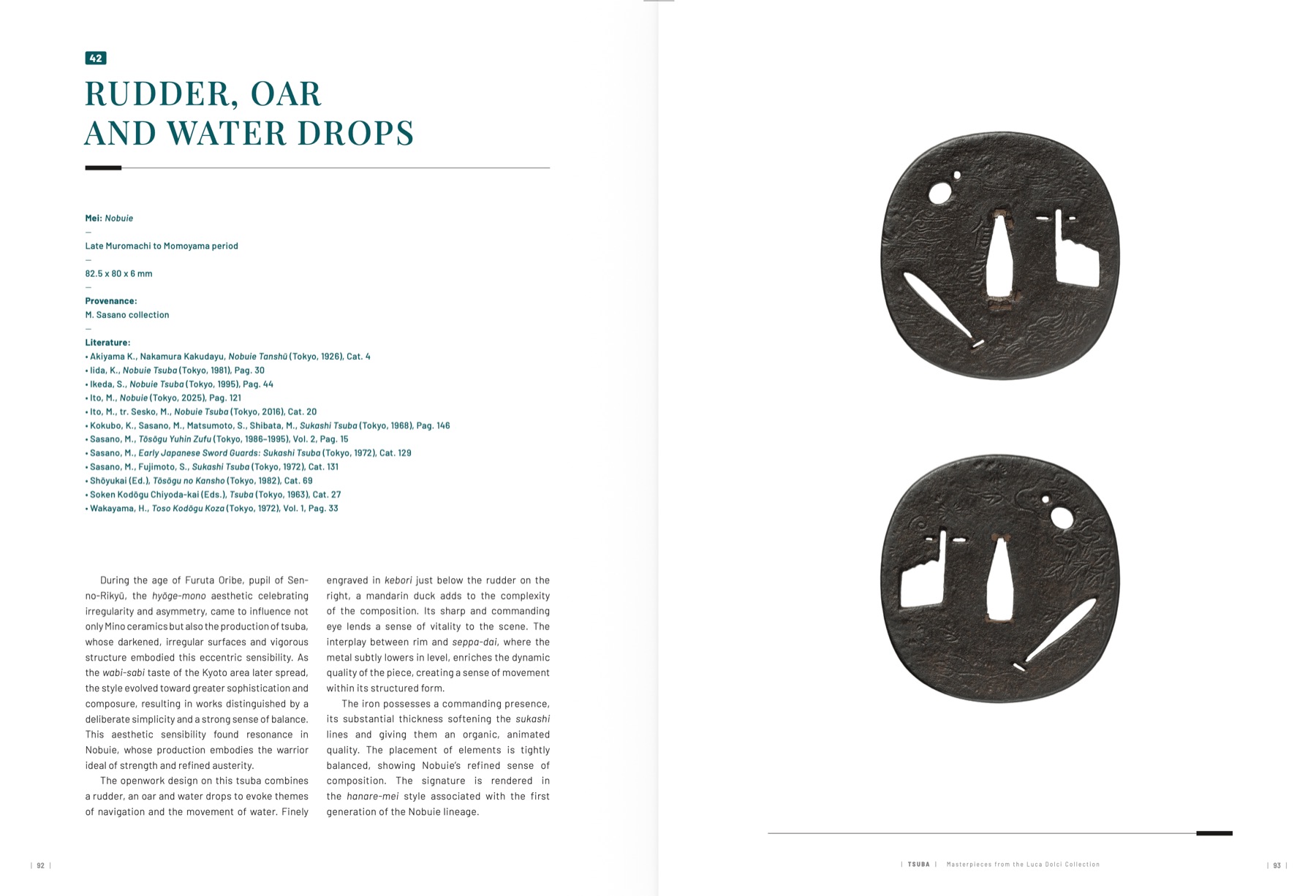
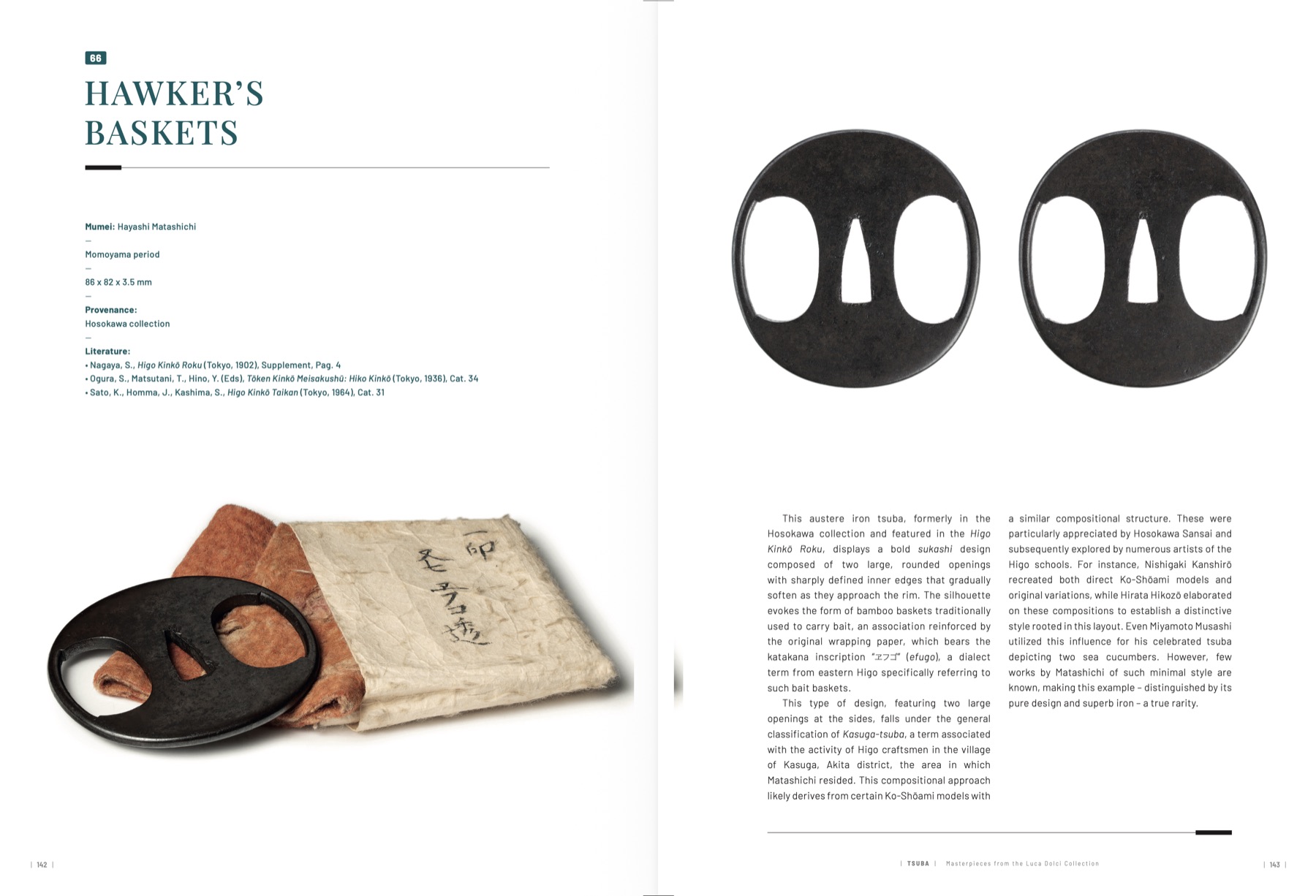
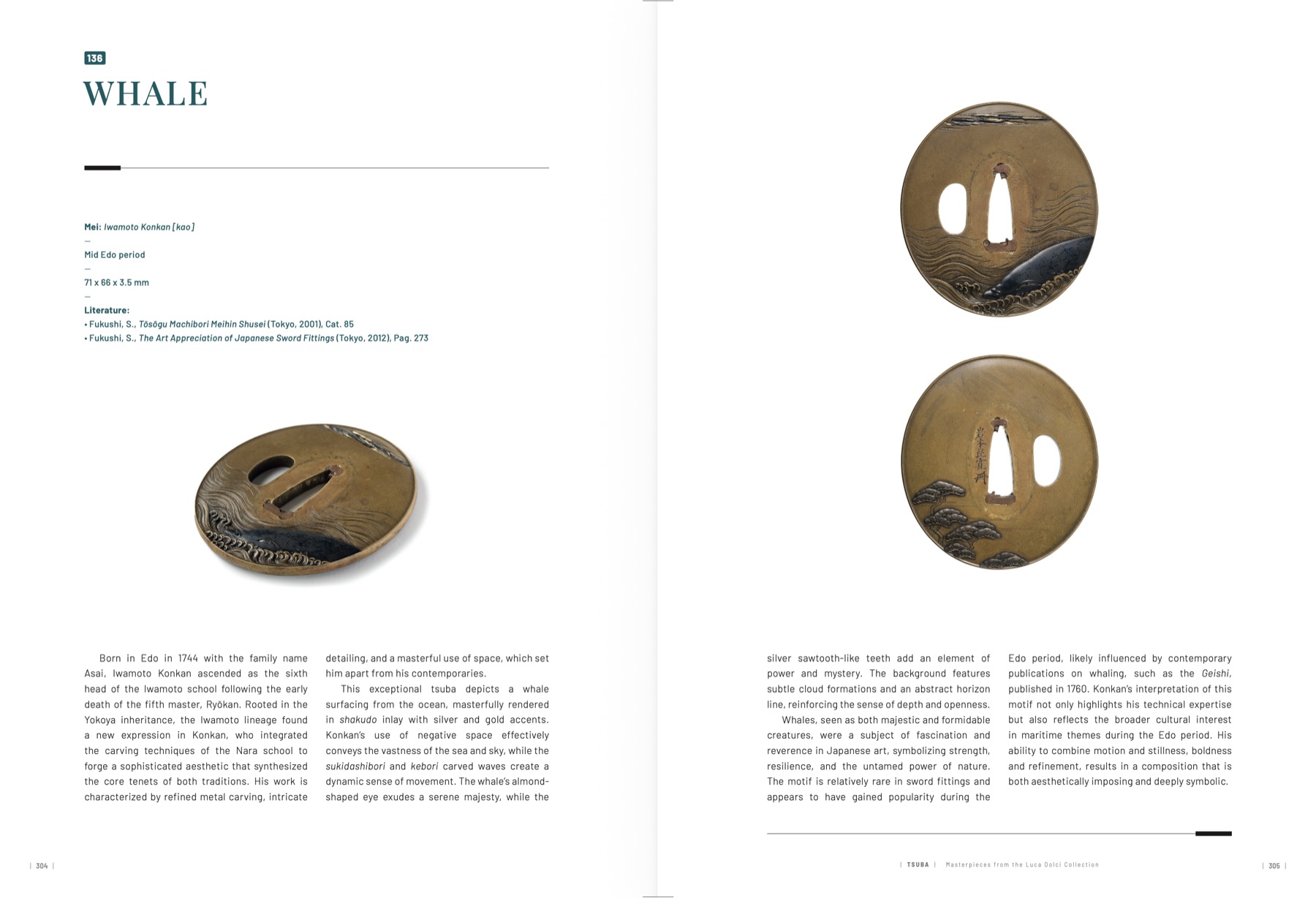
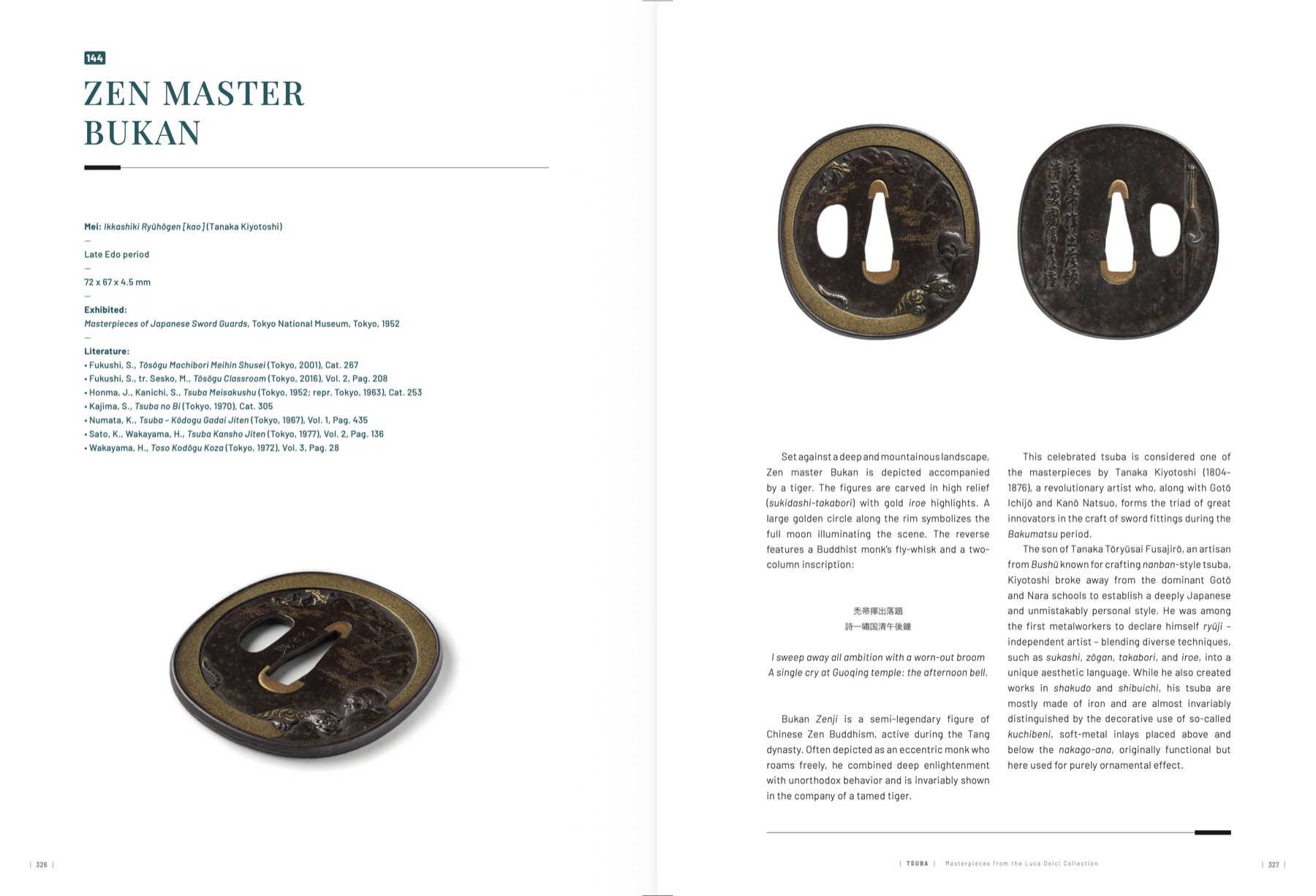
Each of the 150 entries follows the same rigour: signature and attribution, period, measurements, provenance and literature, followed by a full critical essay — illustrated here with four representative plates.
In hand
A short film of the finished volume — its weight, its clothbound cover, and the plates as they appear on the page, shot in hand rather than on a screen.
Acquire the volume
Printed in a limited run and shipped worldwide from the gallery in Milan. For trade, institutional or multiple-copy orders, contact the gallery directly.
We'll send your order to the gallery, then take you to secure payment via SumUp.